

It’s not just tiny homes. It’s people.
The Move Monroe campaign isn’t just about moving buildings. It’s about protecting dignity, preserving community, and ensuring people don’t fall back into unsheltered homelessness.
What’s the deal with this move?
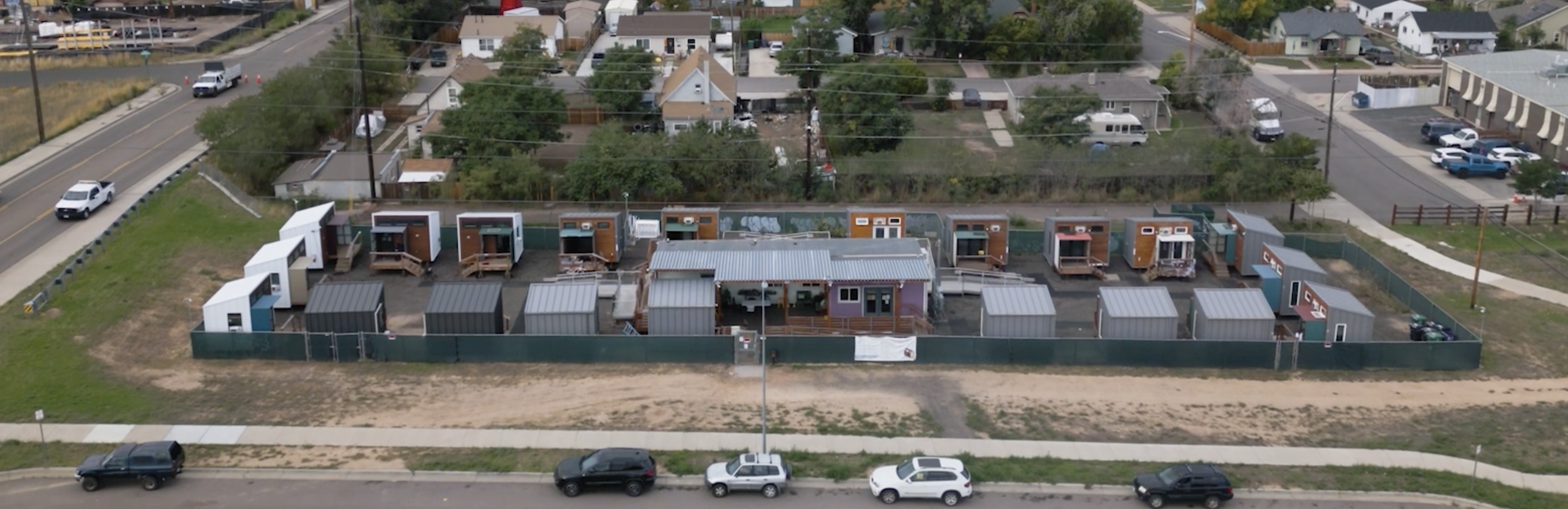
Over the past few months, you have heard from us about the defunding of our Monroe Micro-Community, as well as the permitting challenges that are requiring us to move the site. While these past few months have been difficult as we navigate conversations with City Council, dig deep into land use laws, and advocate for the stability of our sites and community members, they have also reaffirmed why this work matters so deeply. We remain focused on one priority: ensuring that the individuals who are sheltering at Monroe do not lose their stability, community, or access to supportive services during any transition.
The background: First came the tiny home village. As CVC’s original model, it opened up the possibility of non-congregate shelter as an alternate opportunity for shelter for people experiencing homelessness in Denver. Then came the Safe Outdoor Spaces, an innovative model that was rapidly deployed during the pandemic to ensure safe and healthy spaces for people experiencing homelessness. The challenge, however, was permitting. At the time, there was no real pathway for permanency of the sites, and they were being required to move almost every six months.
Finally, in 2023, after months of advocacy from our community, Denver codified the Temporary Managed Community (TMC) permit into the city’s zoning rules. This permit makes it possible for a temporary community to stay in one place for up to four years - but the catch is that we can’t return to that land for another four years. Meaning, if we find a really great parcel of land and a super supportive neighborhood, we can’t just stay there.
Enter: the Monroe Micro-Community.
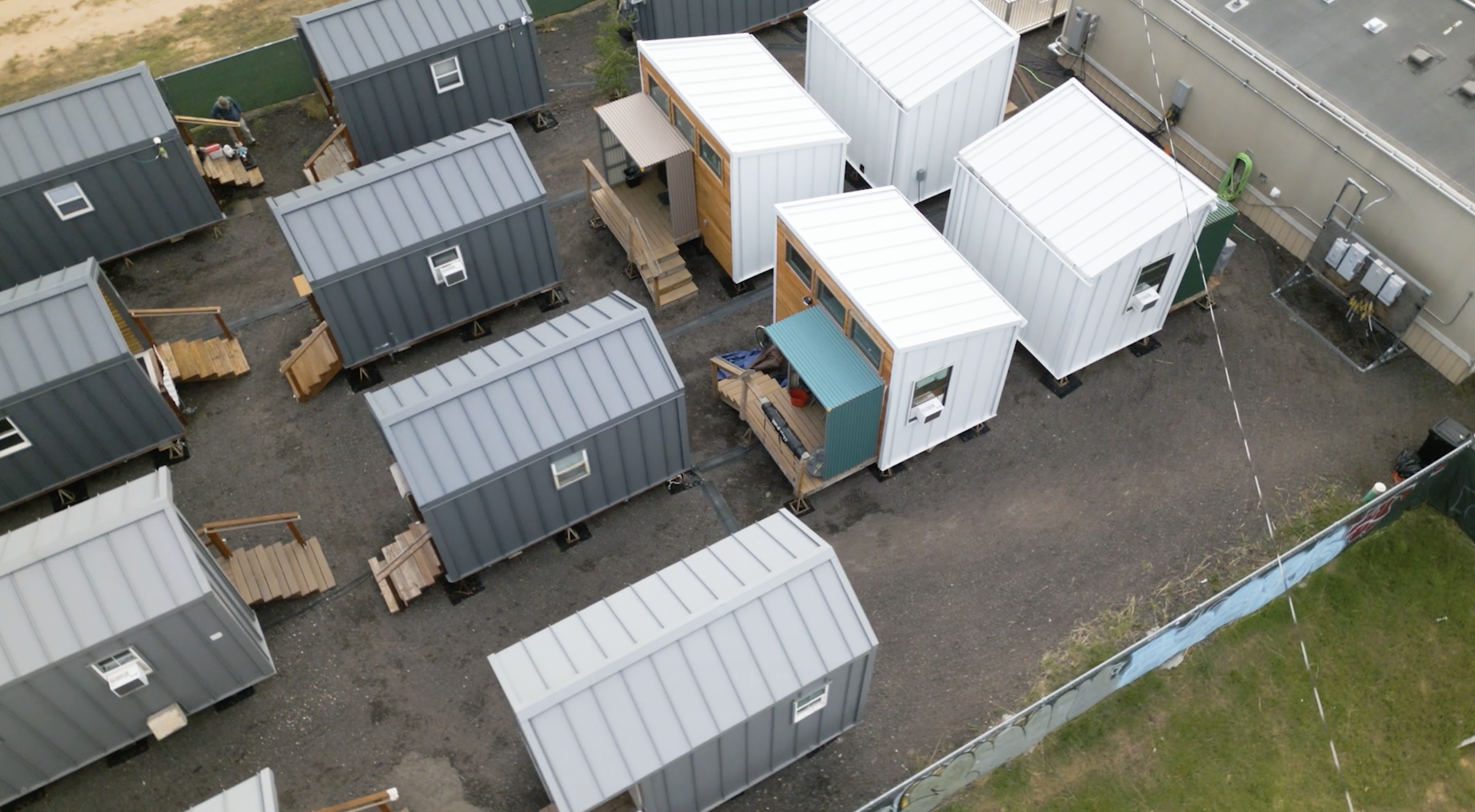
What does it take to move an entire site?
Short answer: it takes a lot of logistical planning.
First, we have to figure out the impact of a new site: making sure it’s safe, has the right permits, and can support units and services.
Then comes the actual move: transporting homes, setting up utilities, and making sure everything is ready for people to live there without disruption.
At the same time, we’re making sure programs like case management, peer support, housing navigation, and mental health support keep running, so no one loses access to the services they rely on. We also spend a lot of time talking with community members, keeping them informed, and making sure their voices guide the process. It’s a big effort, but it’s all about keeping our community safe and supported.
What do you really have to do to move a site?
Find new land. Ensure that the land is zoned appropriately, then secure the permits. This might mean working with City Councils, County Commissioners, Boards, and other government departments - a lot of advocacy and testimony could go on here. It might even mean creating new permit types and zoning codes.
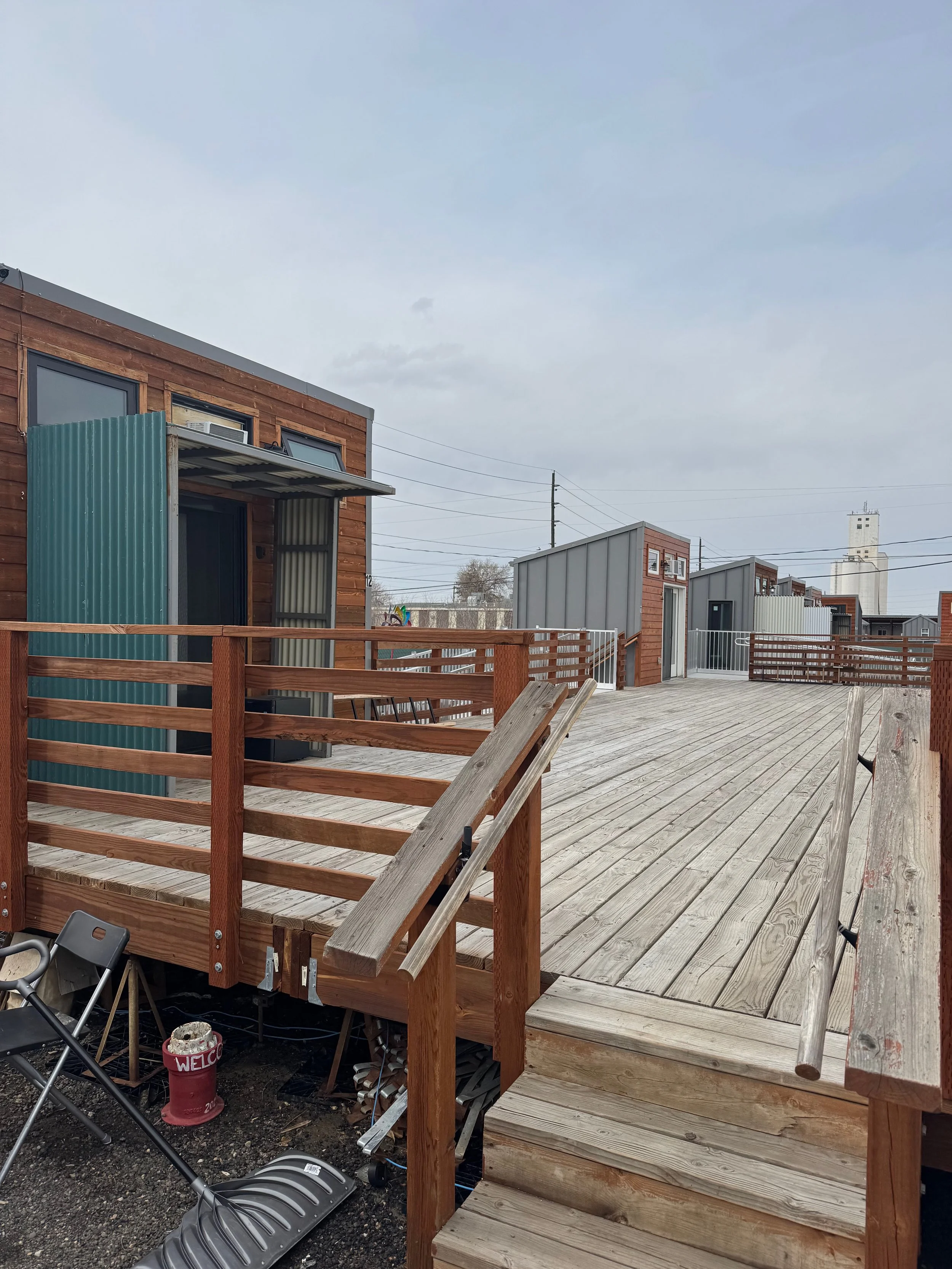
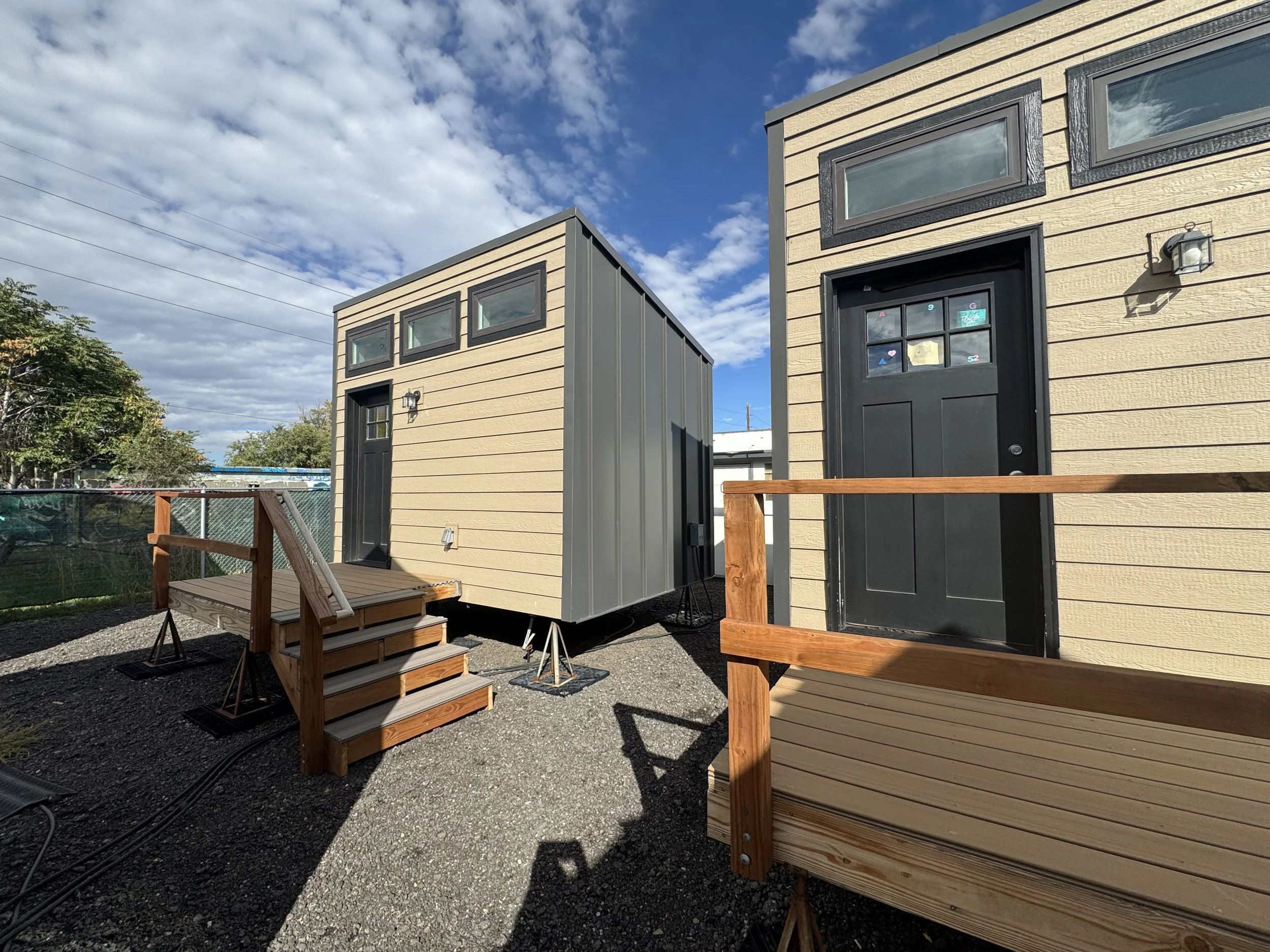
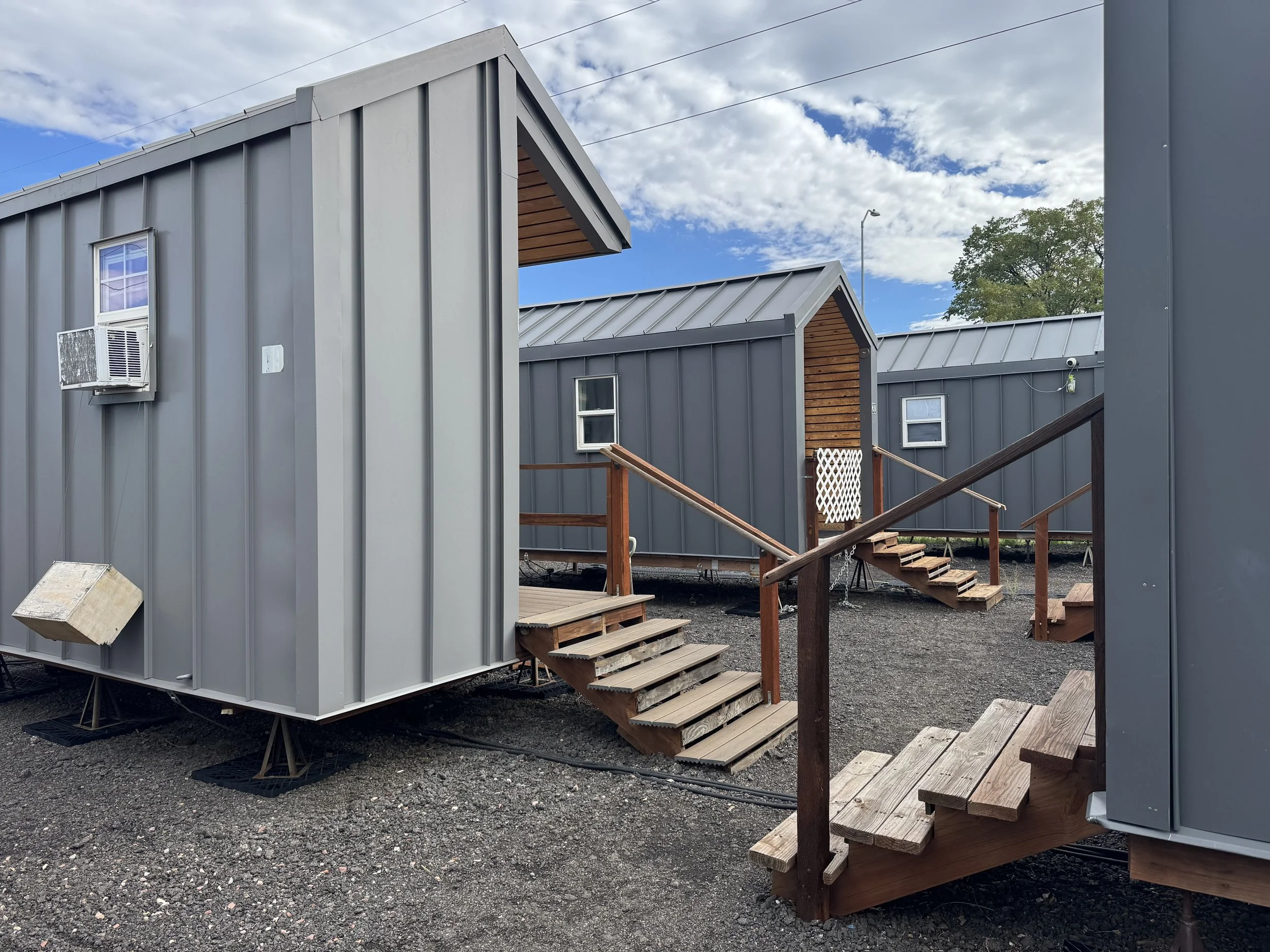
Prep the new land. Working with an architect and general contractor, create a site layout that fits everything needed: units, offices, community center, utility lines, security, decks, ADA compliance. Secure all the necessary construction permits and begin land work: set up fencing, demoing buildings, site grading, utility locates, sewer, plumbing, and electricity hookup, create ground base (recycled asphalt, if not already a suitable surface, such as pavement), install ground anchors for units, prep the decking.
Prep the current site to move. Just like moving a house: boxes, sorting, cleaning. Prepping community members on the logistics of the move - some may move to housing, some may move to other non-congregate sites, some may go to other living situations, and some may move with us, staying in a hotel or other shelter during the actual transition. Strike the community centers (they sort of snap together, as opposed to being built directly from ground up).
Execute the move. Using forklifts or cranes, carefully pick up each unit, one-by-one, and transport via flatbed trucks to the new site. Gently place units onto their new foundation and secure. Move the community center and reassemble. Hook up utilities - plumbing going to the community center, electricity to all units. Install the semi-permanent fencing, build decking and porches, install security cameras and doorbell entry system.
Details. Final permits issued. Community members move back into units, for those that made the transition with us. Or, start/continue the referral process to fill out the new community. Hire any new staff, and onboard current staff to the new site as needed. Continue or create new external partnerships.